As Education Officer at XR2Learn, collaborating with our consortium partners on XR training content development, I wanted to share something we genuinely believe in: great immersive learning starts long before you open a development tool.
Great XR learning doesn’t start with technology - it starts with pedagogy.
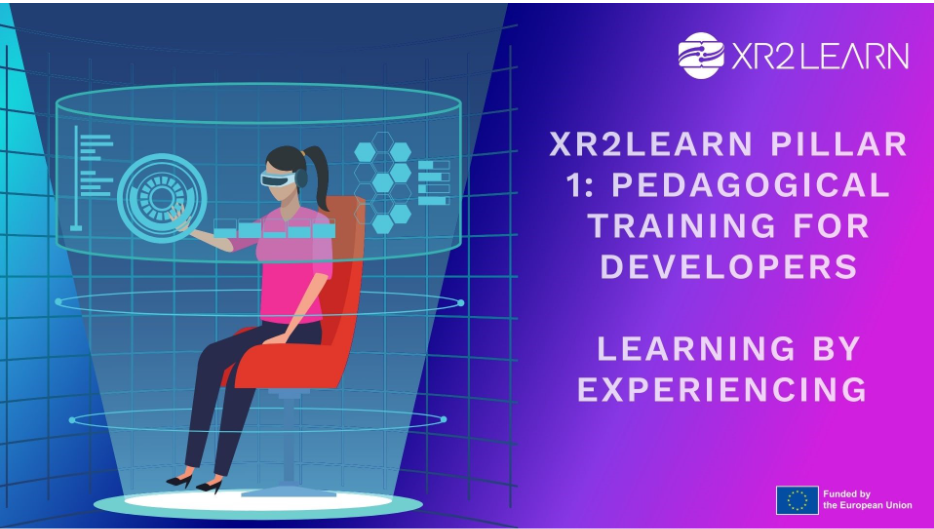
Through Pillar 1, XR2Learn equips XR developers and content creators with the educational foundations needed to design meaningful, safe, and impactful learning experiences. Developers are introduced to proven frameworks such as ASSURE, Bloom’s Taxonomy, and TPACK, ensuring that immersive experiences are not only engaging, but truly effective.
Before building XR content, developers learn why and how people learn - turning immersive interactions into powerful learning moments.
Core principle: Learning by experiencing - every XR interaction is designed to teach, reflect, and transform.
oh! very interesting. I didn’t know about it - your approach seems really structured and interesting!
I’ve actually used Bloom’s Taxonomy quite a lot in my art classes, especially when planning creative projects with students.
For example, when we worked on contemporary art, I first asked them to research different artists and styles, trying to understand the meaning behind the works and the techniques used. Then we moved into analysing colours, composition, simbols etc… and discussing why certain artworks feel powerfull or emotional.
After that they had to create their own piece inspired by a social theme, using some of the techniques we explored in class. At the end everyone presented their work and reflected a bit on the creative process and the choices they made.
I really liked using Bloom’s because it gives a nice structure to the class without making it feel too “academic” — students slowly move from observation to critical thinking and then to actual creative expression. tbh it worked better then I expected
 Core principle: Learning by experiencing - every XR interaction is designed to teach, reflect, and transform.